

As natural as the first time, with a more refreshed and open look.
Epicanthoplasty Revision in Korea

RINE Plastic surgery clinic
What is Epicanthoplasty Revision at RINE Plastic Surgery?
Improves scarring and clearly restores the definition of the eye shape.
Epicanthoplasty revision is a procedure that improves issues caused by a previous epicanthoplasty, such as scarring, excessive opening, or asymmetry, restoring a natural and defined eye shape.
When the results of a poorly performed canthoplasty lead to an unnatural appearance or visible scarring, it can help restore clarity and harmony to the eye shape.
We take a comprehensive approach by considering each individual’s eye shape, skin condition, and desired outcome, performing a delicate, customized procedure with the goal of minimizing scarring and achieving a natural-looking eye shape.
The special features of epicanthoplasty revision surgery at RINE Plastic Surgery.
Why Choose RINE For Epicanthoplasty Revision?
RINE Plastic Surgery creates the optimal eye shape suited to each individual through 1:1 customized line design by its director, who has a refined aesthetic sense.

Specialty 01
Customized restoration design
Considering the existing canthoplasty condition and the individual eye shape, we perform a natural and harmonious restoration.

Specialty 02
Scar improvement and minimization
Scar tissue is carefully refined to create a natural result with minimal visibility.

Specialty 03
Stable canthoplasty restoration
Using techniques that consider adhesion prevention, we maintain the shape and position of the canthoplasty in a stable manner.

Specialty 04
Correction of unnatural canthoplasty
We gently and naturally correct eye shapes that appear overly opened, tight, or unnatural.
Specialty 05
Specialized in complex canthoplasty revision
Even in complicated cases, we pursue high-level results with advanced surgical expertise.
Have a Quick Question?
Epicanthoplasty revision: cases by cause
Epicanthoplasty revision is a procedure that naturally covers excessively exposed inner eye tissue and improves scarring or asymmetry caused by a previous epicanthoplasty. It involves a customized approach based on an analysis of the patient’s eye shape and condition, and if necessary, can also correct additional issues such as scars and wrinkles.
Case 01
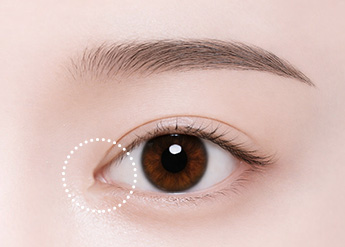
Hook-shaped deformity
Case 02
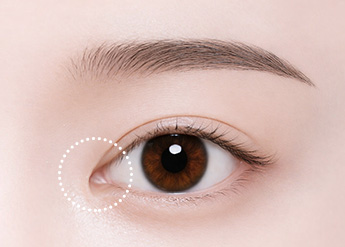
Excessive exposure of the inner corner of the eye
Case 03

Epicanthoplasty scar
Surgical Candidates
When is Epicanthoplasty Revision Needed?
Epicanthoplasty revision at RINE is recommended for the following people:
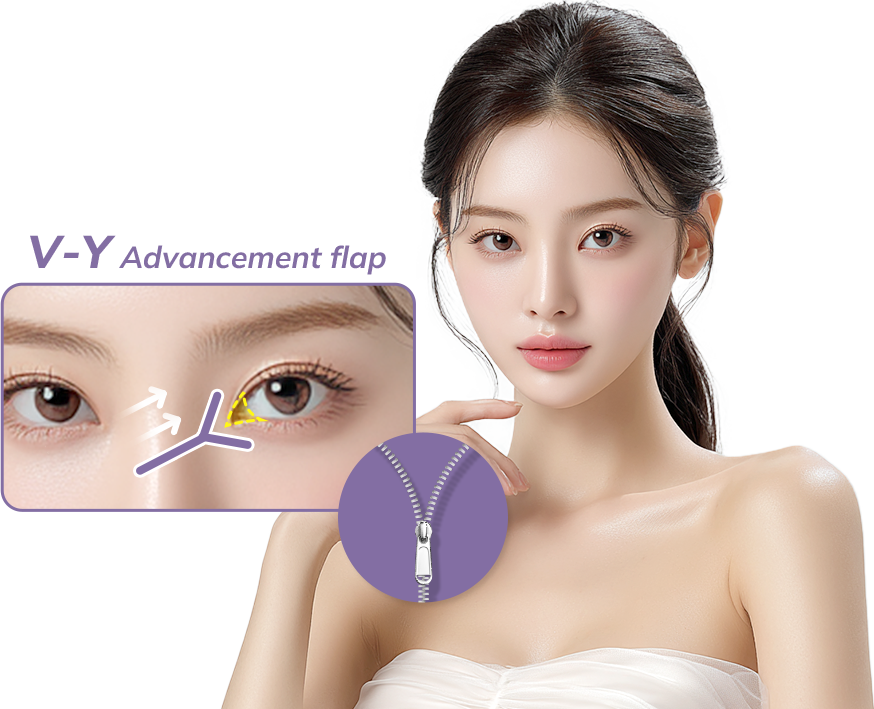
V-Y Advancement Flap
V–Y Advancement Flap Technique for Epicanthoplasty Revision
Determining the appropriate degree of restoration and minimizing expected surgical scarring are the key principles of epicanthoplasty revision.
The V–Y advancement flap technique involves making a V-shaped incision and then closing it by advancing both sides of the V upward, as if zipping it shut. This transforms the V shape into a Y shape, helping to restore the inner corner of the eye.
Results of epicanthoplasty revision surgery

Restores a soft, natural eye shape without worrying about visible scarring.
Q&A
Epicanthoplasty revision
Frequently asked questions
Start Your Rejuvenation Today
Book a free online consultation
Frequently Asked Questions
What is epicanthoplasty revision?
It is a procedure that addresses problems from a previous epicanthoplasty, such as scarring, excessive opening, or asymmetry, to restore a more natural and defined eye shape.
What kinds of issues can this revision help correct?
It can help improve visible scarring, excessive exposure of the inner eye, asymmetry, hook-shaped deformity, and eye shapes that look overly opened, tight, or unnatural.
How long does the surgery usually take?
The procedure usually takes about 30 to 40 minutes.
What is the recovery timeline like?
Suture removal is done after 7 days, recovery is about 10 days, and the follow-up visit is listed as 1 session.
What kind of anesthesia is used?
Sedation is used for the procedure.
Who may need epicanthoplasty revision?
It may be recommended if you are unhappy with your previous result, have indented scars, still have an inadequately corrected epicanthic fold, have too much inner eye exposure, have whitish surgical marks under the eyes, or feel your appearance looks harsh after surgery.
What is the V–Y advancement flap technique?
It is a method that uses a V-shaped incision and then closes it by advancing both sides upward so the V becomes a Y, helping restore the inner corner of the eye while focusing on the right degree of restoration and minimizing expected scarring.
What results can I expect from epicanthoplasty revision?
The procedure is described as restoring a soft, natural eye shape, reducing excessive inner eye exposure, refining scarring and the inner eye line, improving asymmetry, and creating a softer, clearer impression.
Will my eyes look smaller after epicanthoplasty revision?
If a large amount of correction is done, the eyes may appear slightly smaller. However, when the degree of restoration is properly adjusted to match the proportions of the eyes, the overall balance and structure can look more natural and refined rather than simply smaller.
Will the revision leave a lot of scars?
The amount of scarring depends on the revision method and the individual case. Minor scarring may remain depending on the extent of correction, but the procedure is performed with techniques intended to minimize scarring, so significant scarring is described as unlikely.